
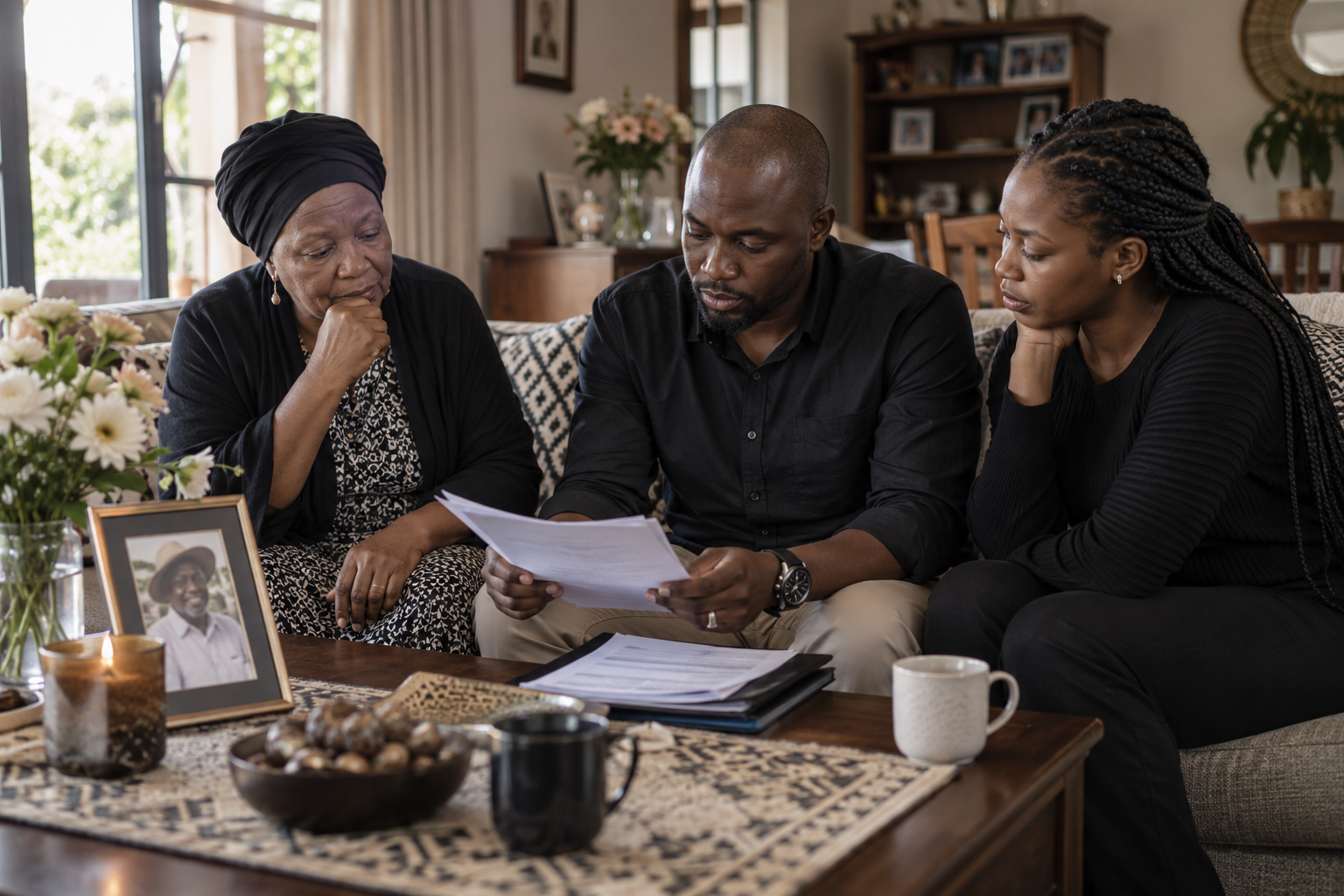
Help with documents, reporting and the practical steps that follow after someone passes away.

Help with RAF claims after a road accident, including documents, forms and claim follow-ups.

Help with divorce paperwork, pension interests and the steps needed after a settlement.

Help with pension, provident fund, GEPF, UIF, COIDA and other employee benefit claims.

Help getting your information and documents ready so you can put your will in place.
We explain things in plain language so you know what is happening.
We help you work through the forms, documents and steps that need attention.
We understand that some matters are personal and sensitive. We deal with them with care and respect.
We help you understand where things stand and what needs to happen next.
Important life events often come with paperwork, unfamiliar processes and difficult decisions. We help you understand what needs to happen, what documents may be required and what your next step should be, so the process feels less overwhelming and more manageable.
Start with a simple conversation about your situation.
We explain what needs to happen and what documents may be required.
We assist with forms, documents and process follow-ups.
You receive clear guidance on the next steps until your matter is finalised.
Start by gathering the basic documents, including the death certificate, the original will if there is one, ID and marriage documents, and information about the person’s assets. A deceased estate should generally be reported to the Master of the High Court within 14 days.
The estate can still be dealt with. If there is no valid will, the law sets out who may inherit from the estate. This is known as intestate succession.
These are documents issued by the Master giving someone authority to deal with the estate. Estates below R250,000 may qualify for a Letter of Authority, while larger estates normally require a Letter of Executorship and a fuller administration process.
There is no single timeline. It depends on the size of the estate, the assets involved, whether the documents are complete, and whether there are disputes or delays with other organisations. Missing information is a common cause of delays.
The Master appoints an executor or representative to deal with the estate. The appointment document confirms who has authority to act on behalf of the estate.
Depending on the employer and fund, there may be pension or provident fund death benefits, group life cover, funeral benefits, unpaid salary or leave, and other employer benefits. Each benefit has its own rules, so it is important to check with both the employer and the relevant fund.
Not always. For many retirement funds covered by the Pension Funds Act, the fund must identify dependants and nominees and decide how the death benefit should be shared. The deceased person’s nomination form is important, but it does not always decide the final payment.
There may still be benefits payable. The fund will normally need to identify possible dependants and apply its rules before deciding who should receive the benefit. GEPF also has its own rules for death benefits where no valid nomination exists.
The fund may need to confirm family relationships, trace dependants, check nomination forms and collect supporting documents before making a decision. Delays can also happen when information is missing or different family members give conflicting information.
Useful documents often include the death certificate, IDs, marriage or relationship documents, children’s birth certificates, bank details, employment information and any pension or benefit records you can find. The exact documents depend on the fund or employer. GEPF, for example, uses specific forms for spouse and child pension claims.
Start by gathering the basic documents, including the death certificate, the original will if there is one, ID and marriage documents, and information about the person’s assets. A deceased estate should generally be reported to the Master of the High Court within 14 days.
The estate can still be dealt with. If there is no valid will, the law sets out who may inherit from the estate. This is known as intestate succession.
These are documents issued by the Master giving someone authority to deal with the estate. Estates below R250,000 may qualify for a Letter of Authority, while larger estates normally require a Letter of Executorship and a fuller administration process.
There is no single timeline. It depends on the size of the estate, the assets involved, whether the documents are complete, and whether there are disputes or delays with other organisations. Missing information is a common cause of delays.
The Master appoints an executor or representative to deal with the estate. The appointment document confirms who has authority to act on behalf of the estate.
Start by gathering the basic documents, including the death certificate, the original will if there is one, ID and marriage documents, and information about the person’s assets. A deceased estate should generally be reported to the Master of the High Court within 14 days.
The estate can still be dealt with. If there is no valid will, the law sets out who may inherit from the estate. This is known as intestate succession.
These are documents issued by the Master giving someone authority to deal with the estate. Estates below R250,000 may qualify for a Letter of Authority, while larger estates normally require a Letter of Executorship and a fuller administration process.
There is no single timeline. It depends on the size of the estate, the assets involved, whether the documents are complete, and whether there are disputes or delays with other organisations. Missing information is a common cause of delays.
The Master appoints an executor or representative to deal with the estate. The appointment document confirms who has authority to act on behalf of the estate.
Receive our latest blog posts directly in your inbox!
Receive our latest blog posts directly in your inbox!